Jaw Pain
Jaw pain is one of those conditions that can quietly affect a surprising number of things.
Eating, talking, yawning, sleeping. When the jaw joint is not functioning well, discomfort can spread into the face, head, neck, and ears. Many people don’t realise that what they are experiencing as a headache, earache, or neck stiffness may have a connection to what is happening in the jaw.
The temporomandibular joint, or TMJ, is one of the most frequently used joints in the body. It is also one of the most commonly overlooked when people are trying to understand recurring head and neck pain.
At Northbridge Chiropractic, we look at the jaw as part of the broader picture of head, neck, and spinal function. A thorough assessment helps us understand what may be contributing and whether chiropractic care is appropriate for your situation.
What Can Contribute to Jaw Pain and TMJ Dysfunction
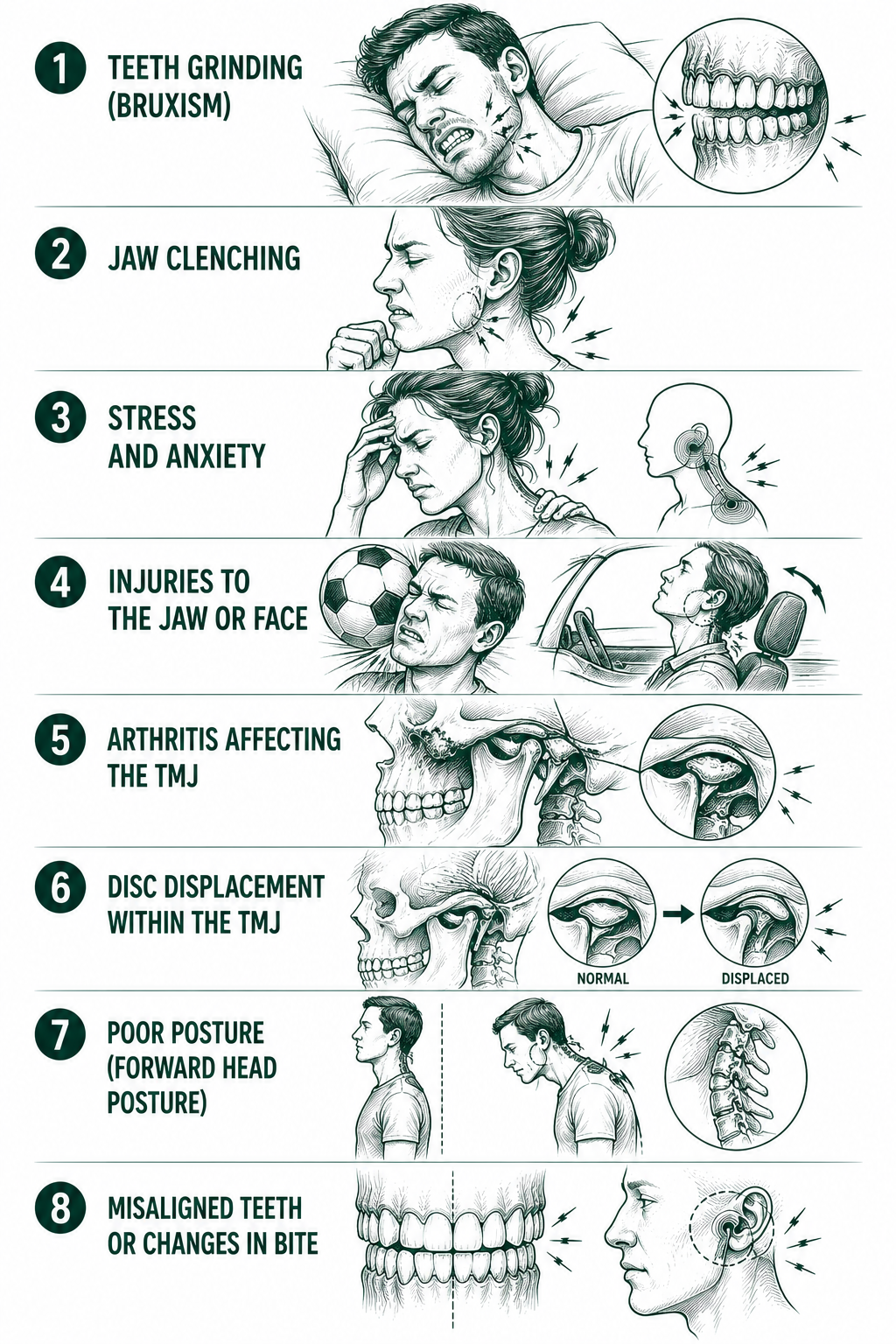
Jaw pain and TMJ disorders can develop from a number of different sources. Some of the most common things we see include:
➜ Teeth grinding, known as bruxism, which places significant repetitive load through the jaw joint and surrounding muscles, often during sleep.
➜ Jaw clenching, which commonly develops as a physical response to stress and can create sustained tension through the TMJ, face, and neck.
➜ Stress and anxiety that manifest physically as tightness through the jaw, neck, and shoulders without the person always being aware of it.
➜ Injuries to the jaw or face, including direct impacts or whiplash-type injuries where the jaw absorbs force during sudden movement.
➜ Arthritis affecting the temporomandibular joint, which can develop gradually and cause progressive changes to joint function.
➜ Disc displacement within the TMJ, where the small cartilage disc inside the joint moves out of its normal position.
➜ Poor posture, particularly a forward head posture, which alters the mechanics of the jaw and increases tension in the surrounding musculature.
➜ Misaligned teeth or changes in bite that place uneven load through the joint over time.
Why Jaw Pain Is Often Connected to the Neck and Head
The TMJ and the cervical spine are closely related.
The muscles that control jaw movement attach to the skull and connect into the neck and upper back. When there is tension or dysfunction in the jaw, the surrounding muscles often compensate, and that tension can travel upward into the head or downward into the neck.
This is why people with TMJ dysfunction commonly experience headaches, particularly at the temples or base of the skull, earaches or a feeling of fullness in the ear, neck stiffness or upper back tension, and clicking or popping sounds when opening or closing the mouth.
We often see patients who have been managing these symptoms individually without realising they may share a common contributing pattern. A thorough assessment of the jaw, neck, and upper spine together can help clarify the picture.
How We Approach Jaw Pain at Northbridge Chiropractic
We start with a thorough assessment before anything else.
We look at the TMJ, the cervical spine, and the surrounding musculature together. We ask about your symptoms, when they started, what makes them better or worse, your stress levels, your sleep, and whether you are aware of grinding or clenching.
Depending on what we find, your care may include chiropractic assessment and management of the cervical spine and upper back, which often play a contributing role in jaw dysfunction, soft tissue therapy and myofascial release for the muscles of the jaw, face, neck, and shoulders, dry needling to address trigger points in the masseter, temporalis, and surrounding musculature that contribute to jaw tension and referred headache patterns, postural guidance to reduce the forward head position that can increase load through the jaw, and practical advice on stress management habits, sleep position, and daily behaviours that may be contributing to jaw tension.
We also work collaboratively where needed. If we feel your situation would benefit from input from a dentist or other health professional, we will let you know and can assist with that process.
Two Things You Can Try in the Meantime
These are general suggestions that many people find helpful for managing jaw tension.
They are not a substitute for a proper assessment, but they are a practical starting point.
What Happens at Your Appointment
If this is your first visit to Northbridge Chiropractic, here is what to expect.
Your first appointment is longer than a standard visit. We take time to understand your history, how the jaw pain developed, and what you have already tried. We ask about your stress levels, your sleep quality, whether you grind or clench, and whether you have had any previous dental work or jaw injuries.
We then carry out a physical assessment of the TMJ, cervical spine, and surrounding soft tissue.
We will walk you through what we find and explain what may be contributing to your discomfort. If we feel chiropractic care may be appropriate for your situation, we will outline what a care plan could look like and give you a realistic sense of what to expect over time.
There is no pressure. You are welcome to ask as many questions as you like before making any decisions.
Follow-up appointments are more focused. As we get to know how your body responds, we adjust the approach accordingly.
Would you like to understand what may be contributing to your jaw pain?
If jaw discomfort, clicking, headaches, or related symptoms have been affecting your daily life, we would be happy to help.
Book online to secure your appointment with Dr Mario Vinci or Dr Nicola Colebrook at Northbridge Chiropractic, Perth. Or call us on (08) 9227 9341.
We accept all major health fund cards.
Get in touch
- 6/177 Stirling Street Perth WA 6000
OPENING HOURS
Practitioners
- Dr Mario:
- Monday 2:00 pm – 7:00 pm
- Tuesday & Thursday 8:30 am – 7:00 pm
- Friday 8:30 am – 12:30 pm
- Saturday 8:00 am – 12:00 pm
- Dr Clay:
- Monday 8:30 am – 1:00 pm
- Wednesday 3:00 pm – 7:00 pm
- Dr Nicola:
- Monday 2:00 pm – 7:00 pm
- Wednesday 8:30 am – 7:00 pm
- Friday 8:30 am – 12:30 pm
Admin Support
- Emmy:
- Monday & Wednesday 12:30 pm – 7:00 pm
- Tuesday & Thursday 8:30 am – 7:00 pm
- Friday 8:30 am – 12:30 pm
- Maya:
- Saturday 8:00am-12:00pm