Hip Pain
Hip pain affects more than just the hip.
When the hip joint is not moving well, the body finds ways to compensate. The lower back takes on more load. The knee absorbs different forces. The way you walk, sit, and sleep gradually shifts to work around the discomfort. Over time, those compensations can create their own problems in areas that seem unrelated.
Most people don’t realise how central the hip is to almost everything the body does. It is one of the largest and most load-bearing joints, and its function influences the entire lower limb and lumbar spine.
At Northbridge Chiropractic, we look at what may be driving your hip pain and work with you on a care plan that is specific to your situation.
What Can Contribute to Hip Pain
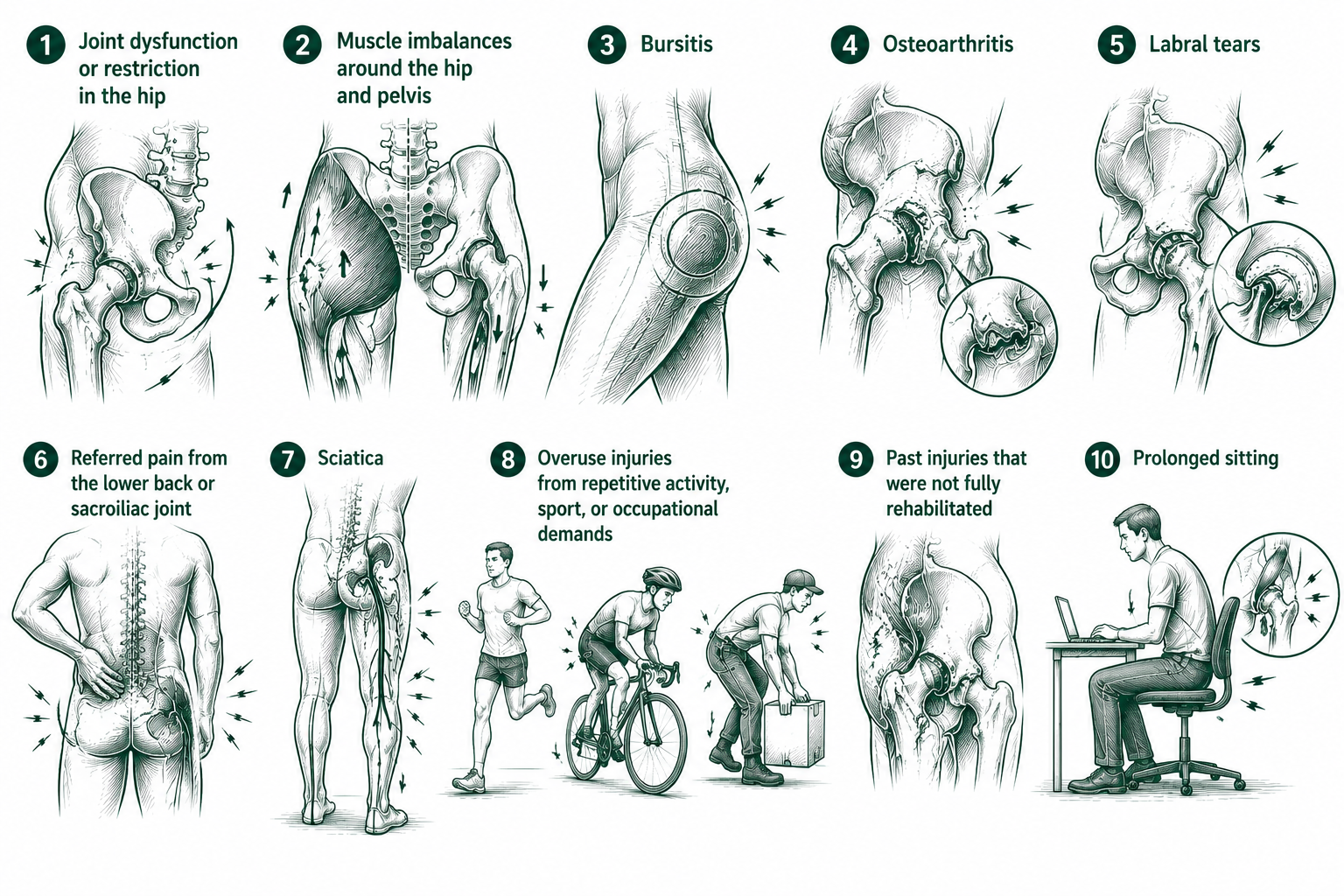
Hip pain can develop from a wide range of sources and affects people of all ages and activity levels. Some of the most common things we see include:
➜ Joint dysfunction or restriction in the hip, where reduced movement leads to stiffness, aching, and compensatory patterns elsewhere in the body.
➜ Muscle imbalances around the hip and pelvis, where some muscles become overactive and tight while others become underactive and weak.
➜ Bursitis, involving inflammation of the fluid-filled sacs that cushion the hip joint, commonly felt on the outer hip.
➜ Osteoarthritis, a gradual wearing of the hip joint that is more common in older patients and can cause progressive stiffness and deep joint pain.
➜ Labral tears, involving the cartilage ring around the hip socket, which can cause a catching or clicking sensation and deep groin or hip pain.
➜ Referred pain from the lower back or sacroiliac joint, which can travel into the hip, buttock, or upper thigh and be mistaken for a hip problem.
➜ Sciatica, where irritation of the sciatic nerve causes pain that travels from the lower back through the buttock and down the leg.
➜ Overuse injuries from repetitive activity, sport, or occupational demands that load the hip joint and surrounding structures over time.
➜ Past injuries that were not fully rehabilitated, leaving altered movement patterns that continue to affect the hip long after the original injury.
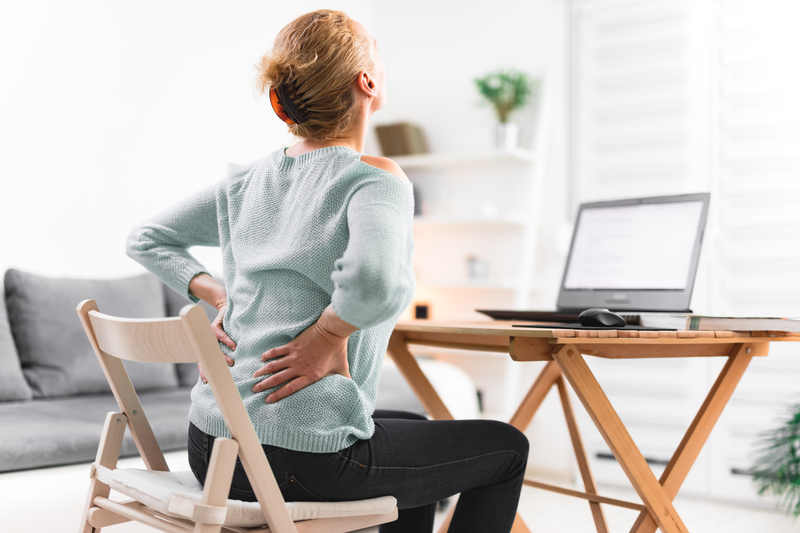
➜ Prolonged sitting, which can tighten the hip flexors and reduce mobility in the hip joint over time.
Why We Look at the Whole Lower Body
The hip, pelvis, and lower back work as a connected unit.
Restriction or dysfunction in one area almost always influences the others. A stiff hip can lead to increased movement demands on the lumbar spine. A pelvic imbalance can alter how the hip joint loads. Lower back problems can refer pain into the hip region in ways that are easy to mistake for a hip injury.
This is why we assess the lower back, pelvis, and hip together rather than treating the area of pain in isolation. We often find that addressing a contributing factor elsewhere in the chain makes a meaningful difference to how the hip responds.
How We Approach Hip Pain at Northbridge Chiropractic
We start with a thorough assessment before anything else.
We look at the hip joint, the pelvis, the lower back, and how the whole lower limb is functioning. We ask about how the pain started, what movements aggravate it, your daily routine, your activity levels, and any previous injuries.
Depending on what we find, your care may include chiropractic assessment and adjustment of the hip, pelvis, and lumbar spine to support movement and function, soft tissue therapy and myofascial release for the muscles of the hip, glutes, hip flexors, and surrounding region, dry needling to address trigger points contributing to pain and tightness in the hip and buttock area, targeted rehabilitation exercises to support hip strength, stability, and movement patterns between visits, and lifestyle and activity guidance to reduce load through the hip during daily tasks where relevant.
Ongoing care also plays a role for those with degenerative conditions or recurring hip discomfort. Supporting movement patterns, building strength, and addressing contributing imbalances over time is often a more sustainable approach than managing flare-ups in isolation.
Two Things You Can Try in the Meantime
These are general suggestions that many people find helpful for managing hip discomfort.
They are not a substitute for a proper assessment, but they are a practical starting point.
What Happens at Your Appointment
If this is your first visit to Northbridge Chiropractic, here is what to expect.
Your first appointment is longer than a standard visit. We take time to understand your history, how the hip pain developed, and what you have already tried. We ask about your activity levels, your daily routine, your sleep position, and any previous injuries to the hip, lower back, or pelvis.
We then carry out a physical assessment of the hip and surrounding structures, including the lower back and pelvis.
We will walk you through what we find and explain what may be contributing to your discomfort. If we feel chiropractic care may be appropriate for your situation, we will outline what a care plan could look like and give you a realistic sense of what to expect over time.
There is no pressure. You are welcome to ask as many questions as you like before making any decisions.
Follow-up appointments are more focused. As we get to know how your body responds, we adjust the approach accordingly.
Would you like to understand what may be contributing to your hip pain?
If hip discomfort has been affecting your movement, your sleep, or your daily life, we would be happy to help.
Book online to secure your appointment with Dr Mario Vinci or Nicola Colebrook at Northbridge Chiropractic, Perth. Or call us on (08) 9227 9341.
We accept all major health fund cards.
Get in
touch
6/177 Stirling Street Perth WA 6000
OPENING HOURS
Practitioners
- Dr Mario:
- Monday 2:00 pm – 7:00 pm
- Tuesday & Thursday 8:30 am – 7:00 pm
- Friday 8:30 am – 12:30 pm
- Saturday 8:00 am – 12:00 pm
- Dr Clay:
- Monday 8:30 am – 6:30 pm
- Wednesday 8:30 pm – 6:30 pm
- Dr Nicola (on maternity leave)
- Sydney (R.Massage Therapist)
- Monday 7:00 am- 12:00 pm
- Thursday 7:00 am- 12:00 pm
Admin Support
- Emmy:
- Monday & Wednesday 12:30 pm – 7:00 pm
- Tuesday & Thursday 8:30 am – 7:00 pm
- Friday 8:30 am – 12:30 pm
- Maya:
- Saturday 8:00am-12:00pm